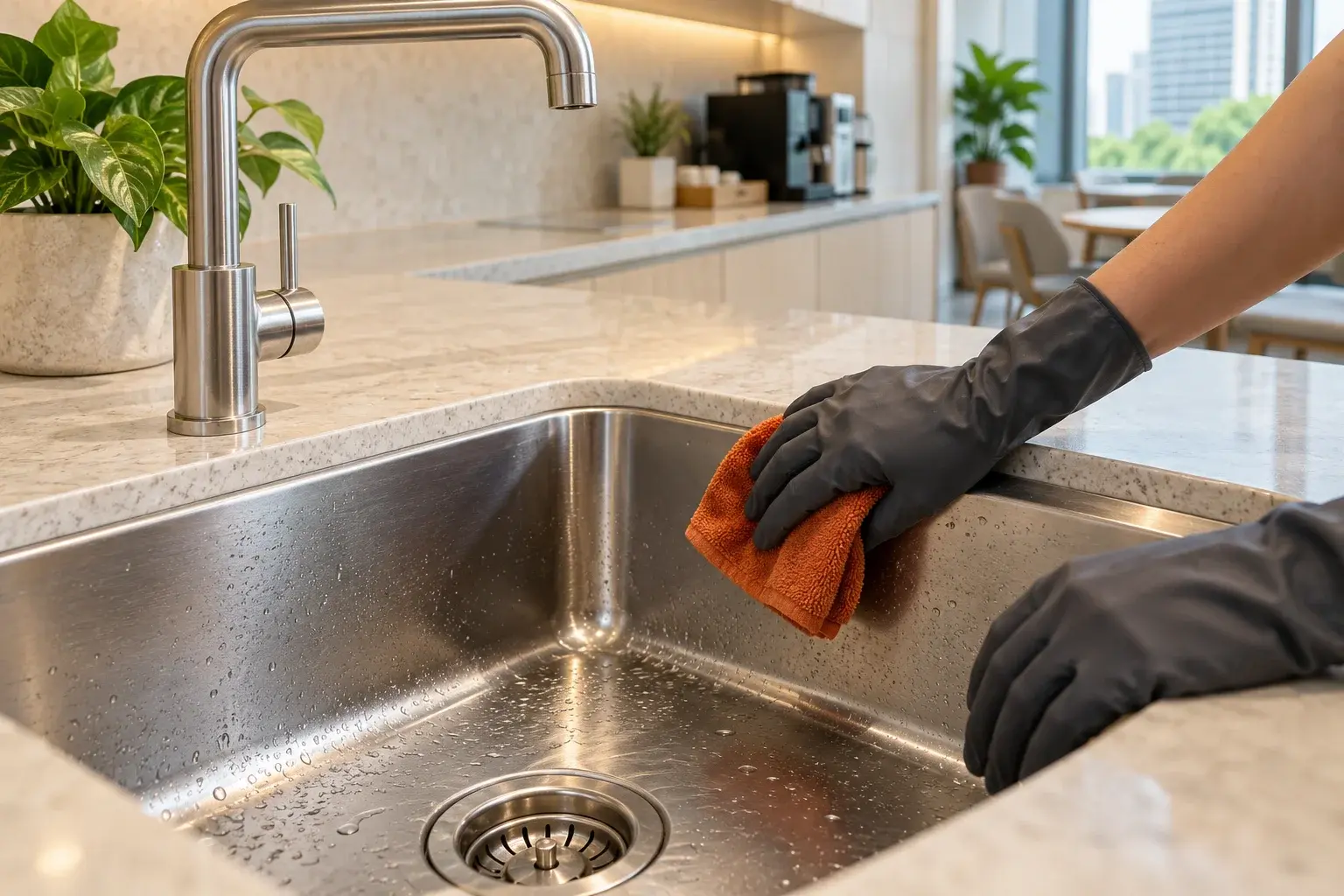
Start with how your space is used
A useful cleaning brief describes a working day, not just a floor area. How many people usually come in? Which rooms host visitors? Does the pantry serve a small team or a busy shared floor? These details help you discuss a sensible schedule and a clear scope.
Walk through the office before you request a quote. Note the floor finishes, shared desks, internal glass, upholstered chairs and areas that need particular attention. Photos can help explain a difficult corner, but remove confidential documents and screens from view.
Separate routine tasks from deeper work
Daily or weekly visits and a one-off deep clean solve different needs. Put regular tasks in one group and occasional work in another. That makes quotes easier to compare and helps avoid assuming a specialist task is already included.
Carpet, chair and sofa shampooing need their own conversation. Ask about suitable methods, preparation and drying time so the space is ready before people return. For internal glass, identify any areas with difficult access before work is agreed.
- Routine: agreed floors, shared surfaces, toilets and pantry areas.
- Periodic: upholstery, carpets, detailed corners and internal glass.
- Event-led: after-renovation, move-in or move-out cleaning.
Make access and boundaries clear
Agree who will open the office, which hours work best and where equipment can be placed. Identify restricted rooms, fragile items and surfaces that need special care. Decide whether staff should clear their own desks before a visit.
Record who supplies consumables and who to contact if something is missing or needs attention. A short written checklist is more useful than a vague request to clean everything. It gives both sides the same understanding of what is included.
Review the plan as your office changes
A growing team, a new layout or a busier visitor schedule can change what your office needs. Keep the brief easy to update. After the first visits, review the agreed areas together and record any changes before adjusting the work. A clear conversation now makes the next visit simpler.
Put a plan around your space.
Tell us what your office needs. We can start with the scope, the space and the timing.
Plan your office care